How Overseas Pakistanis Sell Property in Lahore: A 2026 Guide
Selling a Lahore property from abroad comes down to four things: a properly attested and registered power of attorney, the non-resident tax concession that cuts the 236C bill to the filer rate, moving proceeds through banking channels, and protecting yourself from POA fraud. The October 2026 rules.
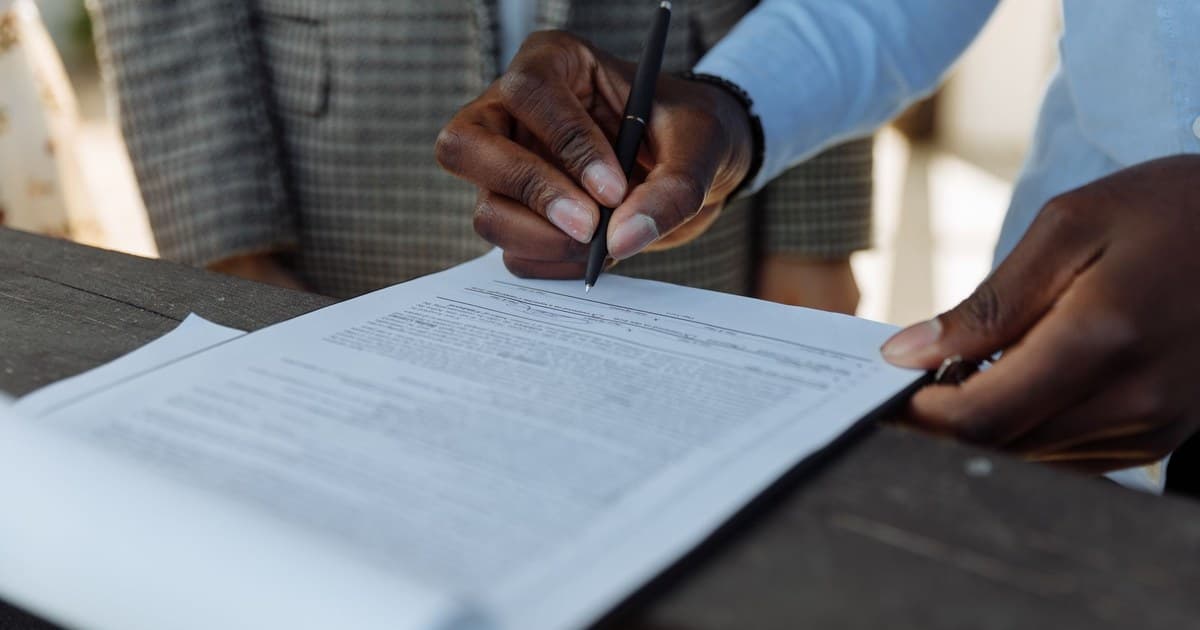
You can sell your Lahore property without boarding a flight. Plenty of overseas Pakistanis do it every year, and the legal system is built to allow it. What goes wrong in these sales is rarely the market. It is the paperwork: a power of attorney that was never properly attested, a tax bill at the penal rate that could have been the filer rate, or proceeds that get stuck in Pakistan because the money moved through the wrong channel.
This guide is the selling-side companion to our guide for overseas Pakistanis buying property in Lahore. It covers the four things that decide a remote sale: the power of attorney, the seller's taxes, repatriation of the proceeds, and fraud protection. All rules below are the October 2026 position.
Last updated: 22 October 2026. Reviewed by Shakir Estate. This guide is general information, not legal or tax advice. For a complex case, speak to a property lawyer and a tax professional before the transfer date.
Start with the tax question, because it decides your net proceeds
The federal advance tax on selling property, section 236C, is collected at transfer and paid by the seller. For tax year 2026-27 the Finance Act 2026 set a single flat rate of 2.75% for filers on the Active Taxpayers List. For non-filers, the best-supported current figure across the 2026-27 rate sources is 11.5%, though a couple of secondary sources quote lower figures, so this is one to re-check against the FBR rate card before your transfer date.
On a Rs 2.5 crore sale, that gap is brutal: Rs 687,500 at the filer rate against Rs 2.875 million at the non-filer rate. An overseas seller who never files a Pakistani return would default to the non-filer column. There is a specific concession for you, and it is worth more than anything else in this guide.
The non-resident concession: filer rates with NICOP and a PSID
Under FBR's official guidance for overseas Pakistanis, a non-resident pays property transfer taxes at the filer rate even as a non-filer, provided they hold a valid NICOP or Pakistan Origin Card and their stay in Pakistan in the financial year is fewer than 183 days. The statutory basis is clause 111AC of the Second Schedule, and the procedure runs through the FBR portal: the registering authority or housing society opens the "Overseas Pakistanis" section, generates a PSID payment slip, the Commissioner approves it through the IRIS system, and you pay at the filer rate. Start that process early, because Commissioner approval is a step in the chain, not an instant receipt. Keep your NICOP valid and keep proof of your stay, since passport stamps are the usual evidence of the under-183-day condition.
The tax base is the higher of your price and the FBR value
Section 68(6) of the Income Tax Ordinance says the base for 236C cannot be less than the FBR-notified fair market value for the area. In practice the tax is charged on whichever is higher: your declared sale price or the FBR table value. So check the FBR valuation table on the transaction date, not the one your agent remembers from last year.
Here is a point in your favour. SRO 876(I)/2026, effective 19 May 2026, cut the FBR valuation rows for DHA Lahore, with widely reported reductions on residential blocks. For a DHA sale this can materially lower the tax base relative to older tables. Our full Pakistan property tax guide works through the complete federal, Punjab and society-level charges if you want every line item.
Capital gains: the acquisition date matters more than the sale date
Separate from 236C, section 37 taxes the gain on disposal. The Finance Act 2024 drew a hard line at 1 July 2024:
| When the property was acquired | CGT rate |
|---|---|
| On or after 1 July 2024 | 15% flat of the net gain for ATL filers; non-ATL taxed under normal slab rates with a 15% minimum |
| Before 1 July 2024 | Old holding-period slabs: open plots 15% falling to 0% after 6 years; constructed property 15% to 0% after 4 years; flats 15% to 0% after 2 years |
Whether the 15% flat rate turns purely on ATL status at the date of disposal is the test in the statute, so an overseas seller who is not on the ATL falls into the non-ATL limb for CGT purposes. One documented route keeps things simpler: if the property was acquired through the Foreign Currency Value Account or the NRP Rupee Value Account behind a Roshan Digital Account, the 236C collected at transfer is reported as a final discharge of tax liability in place of a section-37 computation. The current statutory wording of that provision could not be retrieved for this article, so confirm it against the ordinance or with counsel before relying on it.
Two mechanics to know. The 236C withholding is normally an adjustable advance tax, credited against your final income tax when you file a Pakistani return, with excess refundable. The exception is the same-tax-year flip: if you bought and sold the property in the same tax year, section 236C(2) makes the collection a minimum tax, non-adjustable.
And a note on what no longer exists: section 7E, the deemed-income tax on immovable property, was struck down by the Federal Constitutional Court on 7 May 2026 and formally omitted by the Finance Act 2026, so no 7E clearance is needed for transfers from 1 July 2026. Keep your 2022 to 2025 7E challans anyway, since residual cross-references in the ordinance linger and registrars may still ask.
The power of attorney: your signature in Lahore
Every remote sale hinges on this document. The rules here have real bite, and a surprising amount of "standard advice" on Pakistani forums understates them.
Use a special POA, never a general one
Every serious source agrees on this. A special power of attorney names the exact property, sets a minimum sale price, requires the proceeds to be paid into your own account, and carries an end date. It should expressly forbid mortgaging, gifting and sub-delegation. A general POA hands your attorney authority over your affairs far beyond the sale, and it is the instrument behind a large share of property fraud involving overseas Pakistanis. Have a lawyer draft the special POA rather than copying a template; this document decides what your attorney is allowed to do with your property.
Two routes to a valid POA
The NADRA digital route. NADRA's online POA service (poa.nadra.gov.pk) is active in 2026. You create an account, upload the signed POA with thumb impressions, you and your witnesses complete biometric verification, pay the fee online by card, and attend a video interview with a consular officer with your witnesses. You must give final consent within 15 days of the request, or the application is rejected. The fee figure that appears online is from 2021 and may have changed, so confirm the current amount on the portal.
The manual embassy route. Sign the POA in person at the Pakistani embassy or consulate in your country of residence (the executant and witnesses sign before the consular officer). The mission attests it. Then your attorney takes it to Pakistan's Ministry of Foreign Affairs for counter-attestation, appearing in person with their original CNIC and a Rs 60 revenue stamp. MOFA has camp offices in Lahore, Karachi, Peshawar and Quetta that are treated at par with Islamabad. Note the clock: an embassy-attested POA is valid for 120 days from attestation under MOFA's May 2026 standard operating procedures, so do not get it attested months before the sale is ready.
Register it, and budget for the stamp duty
This is the step that sinks remote sales. In Punjab, a POA used for a property transaction must be registered with the sub-registrar in the district where the property sits. An unregistered POA for a property deal has no legal standing. Foreign-executed instruments must also be stamped within three months of first receipt in Pakistan under the Stamp Act.
And here is the finding most sellers miss: the stamp duty on a sale POA is not trivial. Under Article 48 of the Punjab Stamp Act, as amended by the Punjab Finance Act 2024, a sale POA given for consideration costs 3% of the DC-notified value of the property; a sale POA without consideration costs 2% of the DC-notified value unless it is between close family members, where it is a flat Rs 3,000. Only a general (non-sale) POA is cheap, at Rs 2,000. Budget the 2% like a line item, because on a multi-crore property it is a real number.
What DHA Lahore and the registrars specifically ask
If your property is in DHA Lahore, the Transfer Branch has its own requirements. DHA's own special POA is construction-only and cannot be used to sell, and it must be cancelled (a two-week process) before a transfer can start. For a seller abroad, the transfer goes through embassy attestation instead: the complete transfer document set attested at the Pakistani embassy or consulate, an attested CNIC copy, attested passport and visa pages with entry and exit stamps, and an authority letter on Rs 300 stamp paper for whoever submits the papers. The No Demand Certificate comes first, clearing all dues, and the Transfer Branch verifies the documents through a QR code and directly with the embassy or consulate before the transfer is completed in the presence of the authority holder.
For properties going through the registrar, the e-registration route accepts an attorney acting under a POA verified by the sub-registrar, and PLRA has piloted a POA-free e-registry for overseas Pakistanis starting in London, routing verification through MOFA and NADRA biometrics. Check whether it covers your country before choosing a route. Bahria Town's official requirements for an overseas seller's attorney could not be located on an official source for this article; confirm the current procedure directly with Bahria's transfer office rather than relying on agent websites.
Getting the money out: repatriation routes
If the property was bought with RDA funds
The cleanest path. Funds in a Roshan Digital Account can only come from inward remittances, no local credits allowed, and the proceeds of property bought through the account can go back into it and are freely repatriable without bank or SBP approval. Keep your electronic Proceeds Realisation Certificates as proof the money arrived from abroad. One honest caveat: a documented 2024 case saw sale proceeds sit in a bank's approval department for over a month before repatriation went through, so build time into your plans even on the clean route.
The NRVA framework for non-resident disinvestment
Under the State Bank's NRVA real-estate framework (FE Circular 01/2020), a non-resident can disinvest on a repatriable basis with these conditions. There is no minimum holding period, but if you sell within three years of the final payment, only the principal can be repatriated immediately; the capital gain becomes repatriable after three years. The sale payment must originate from the buyer's bank account by payment order, banker's cheque or account-to-account transfer. The bank will ask for the sale agreement, a valuation report no more than three months old from a valuator on the Pakistan Banks Association panel (with a plus-or-minus 10% tolerance against the sale price), the NICOPs or CNICs of both parties, and your standing instructions. The title document and tax-paid challans follow within six months.
If the property was bought with local funds
There is no published standalone SBP checklist for repatriating the proceeds of property bought without NRVA or RDA funds. In practice this runs through the general Form M route under the Foreign Exchange Manual: the authorized dealer's bank approves the remittance against documentary evidence of the transaction, and the dealer must satisfy itself the transaction is genuine. Expect the bank to want the registered transfer documents, the 236C payment challan, and your NICOP. No FBR tax-clearance requirement for remittance was found in any official source. Talk to your bank's FX desk before transfer day, because the exact document list is the bank's, not the regulator's.
Protecting yourself from POA fraud
Remote sellers are the classic victims of property fraud, and the documented cases are worth taking seriously. Fraudsters have sold an overseas Pakistani's land in Fateh Jang using a fake POA made with his own CNIC, transferred a woman's property abroad using a POA prepared with embassy connivance, and illegally mutated a US resident's property on a fake death certificate through an unregistered POA accepted at a sub-registrar's office. The Overseas Pakistanis Commission has received over 7,800 complaints, most of them about property fraud, police matters and revenue disputes.
The protections that hold up are the ones in this guide:
- A special POA, registered with the sub-registrar, limited to the one property, with a minimum price, an end date, and proceeds routed to your own account.
- No mortgaging, gifting or sub-delegation clauses.
- Payment only through banking channels, never cash, so the money trail exists.
- Verify the transfer yourself with the society or transfer branch; do not rely on the attorney's word that it happened.
- Keep your own copies of everything: the POA, the attestation receipts, the transfer challans, the bank advices.
What a remote sale costs you, honestly
Before you agree on a price, budget the seller-side costs against the proceeds, because they all come out of the number you keep:
- Section 236C at transfer: 2.75% of the higher of the declared price and the FBR table value with the non-resident concession; 11.5% without it.
- POA stamp duty and registration: 2% of the DC-notified value for a sale POA to a non-family attorney, or Rs 3,000 flat for close family.
- Capital gains tax on the gain, if any, at the rate that applies to your acquisition date.
- The society's transfer fee, membership and verification charges: confirm the current schedule with the society office.
- Agent commission: whatever you agree in writing with your dealer.
- Valuation gaps: on an NRVA disinvestment, the bank's panel valuation can move the repatriable figure.
For pricing the sale itself, get an evidence-based number before you tell anyone a figure. Check your property's estimated value with Shakir Estate's AI Property Value Estimator: the range and per-marla evidence it returns are a useful sanity check on any dealer's quote, and they give you a grounded minimum price to write into the POA. Our guide to pricing before selling walks through the full method, and the token and bayana guide explains the payment stages a serious buyer will expect.
AI valuations are estimates based on available market information and property inputs. Actual sale value can vary according to exact location, condition, plot orientation, street width, development status, demand, documentation and negotiation.
Frequently asked questions
Can I sell my Lahore property without visiting Pakistan?
Yes. Either use NADRA's digital POA service with its biometric and video-interview process, or sign a special POA at the Pakistani embassy or consulate and have it counter-attested by the Ministry of Foreign Affairs and registered with the sub-registrar in the district where the property sits. Both routes let an attorney appear on your behalf on transfer day.
Do overseas Pakistanis pay tax at the filer or non-filer rate?
At the filer rate. FBR's official guidance says overseas Pakistanis holding a valid NICOP or Pakistan Origin Card, with fewer than 183 days of stay in Pakistan in the financial year, pay 236C and 236K at filer rates even as non-filers. The registering authority generates a PSID on the FBR portal's Overseas Pakistanis section, the Commissioner approves it through IRIS, and the tax is paid at the filer rate. That is 2.75% for 236C instead of 11.5%.
How long is an embassy-attested POA valid?
120 days from attestation, under the Ministry of Foreign Affairs standard operating procedures from May 2026. Time the attestation to the sale rather than getting it done far in advance.
What does it cost to register a sale POA in Pakistan?
Stamp duty under the Punjab Stamp Act is 2% of the DC-notified property value for a sale POA to a non-family attorney, or 3% if given for consideration. Between close family members it is a flat Rs 3,000, and a general (non-sale) POA costs Rs 2,000. Registration fees are separate and were not verifiable at the time of writing.
Can I send the sale proceeds abroad?
If the property was bought with Roshan Digital Account funds, the proceeds can re-enter the RDA and leave Pakistan freely without bank or SBP approval. Under the SBP's NRVA framework, repatriation is allowed through your bank against the documented sale, with a three-year lock-in on the capital gain if you disinvest early. For property bought with local funds there is no published standalone checklist; the bank processes it under the general Form M route, so confirm the document list with the bank's FX desk before transfer day.
I bought the property through Roshan Apna Ghar. Is the sale tax simple?
The RDA regime is reported to treat the 236C collected at transfer as a final discharge of tax liability in place of a separate capital gains computation, but the current statutory wording could not be retrieved for this article. Confirm it against the ordinance or with counsel before relying on it, and keep the full documentary chain of the original RDA funding.
A final word
A remote sale works when four pieces are in place before any buyer appears: a special POA that is attested, counter-attested and registered; the PSID process that puts you on the filer rate; a banking-channel path for the proceeds; and your own verification of the transfer. The sellers who get hurt are the ones who trusted one piece to someone else. The sellers who keep their money are the ones who built every piece themselves.
Selling a Lahore property from abroad, or deciding whether the numbers work? Message Shakir Estate on WhatsApp at +92 300 4630499 with the society, block and size. We will tell you honestly what we can verify before any money moves.
Reviewed by Shakir Estate. Last updated: 22 October 2026.
236C rates and the non-resident concession are verified against the Finance Act 2026, FBR's official overseas-Pakistanis guidance, the Income Tax Ordinance 2001, the Punjab Stamp Act, the MOFA May 2026 attestation SOPs and SBP's published foreign-exchange framework, all read on 22 October 2026. Tax rules change and individual situations differ, so confirm the current position with FBR or a tax professional before your transfer date.
Wondering what your plot is worth?
Get an AI-generated market estimate backed by current research — comparables, rates and sources included.
Estimate My Plot Value